Risk-reward ratio
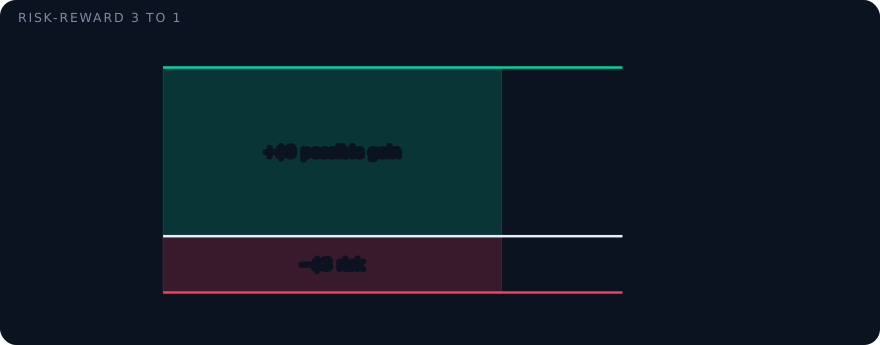
The risk-reward ratio compares the possible gain up to the target with the possible loss down to the stop. A ratio of 3 means three dollars of possible gain for every dollar at risk.
Calculating the ratio
Risk-reward = (target − entry) ÷ (entry − stop)
Example: entry at $50, stop at $47, target at $59. Risk $3, possible gain $9, ratio 3 to 1.
Why the ratio matters, and its limits
With a ratio of 3 to 1 you can be wrong in two out of three trades and still roughly break even, before costs. With 1 to 1 you need to be right more than half the time.
A high ratio is only useful if the target is realistic. A target far beyond the next resistance or the expected move looks good on paper and is rarely reached.
Frequently asked questions
What is a good risk-reward ratio?
Many traders look for at least 2 to 1. More important is the combination with the hit rate: a lower ratio can work with a high hit rate and the other way round.
How does hit rate relate to risk-reward?
Breakeven hit rate = 1 ÷ (1 + ratio). At 2 to 1 you need to be right in about 33 % of trades, at 3 to 1 in about 25 %, before costs.
See it in the screener
The live demo shows every term with example data, right next to the score and its reasons.